
VidSummit 2025 dubbing: strategies and translation playbook
Published by Ditto Team · 3 min read · 1 year ago
Read in:AfrikaansArabicAssameseAzerbaijaniBashkirBelarusianBulgarianBanglaTibetanBretonBosnianCatalanCzechWelshDanishGermanGreekSpanishEstonianBasquePersianFinnishFaroeseFrenchGalicianGujaratiHausaHebrewHindiCroatianHaitian CreoleHungarianArmenianIndonesianIcelandicItalianJapaneseKazakhKhmerKannadaKoreanLatinLuxembourgishLingalaLaoLithuanianMalagasyMāoriMacedonianMalayalamMongolianMarathiMalayMalteseNepaliDutchNorwegian NynorskNorwegianPunjabiPolishPortugueseRomanianRussianSinhalaSlovakSlovenianShonaSomaliAlbanianSerbianSundaneseSwedishSwahiliTamilTeluguTajikThaiTurkmenFilipinoTurkishTatarUkrainianUrduVietnameseYorubaChinese
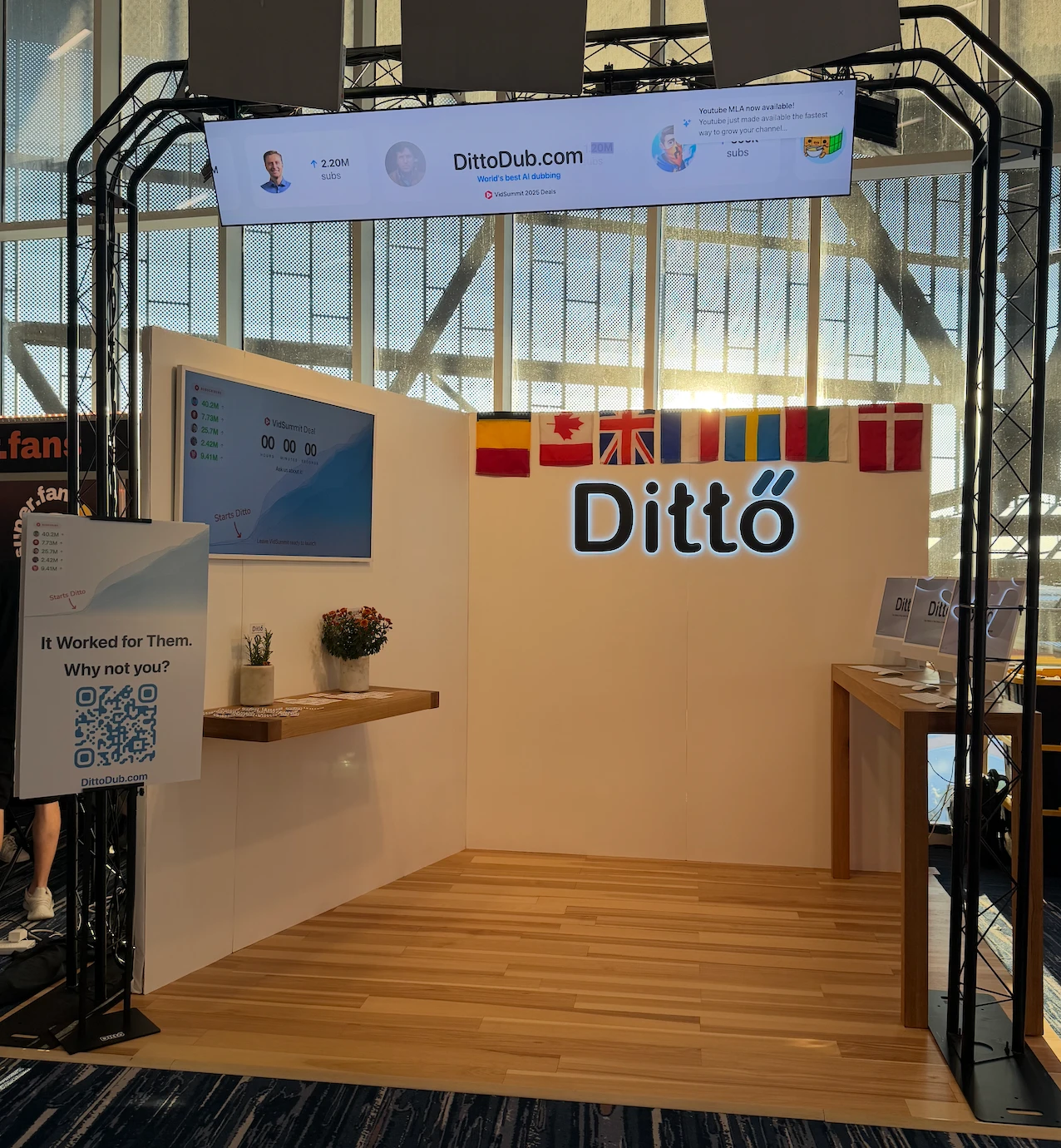
We just wrapped three packed days at VidSummit 2025 (October 7–9, Dallas) as the official dubbing solution. If you searched “VidSummit dubbing,” “VidSummit translation,” or “VidSummit dub,” this guide distills what we shared at the booth—and how to ship your first two languages fast.
Creators told us they want more watch time without second channels. Multi‑language audio (MLA) solves that: one URL with multiple language tracks, consolidated comments, and discoverability that compounds. DittoDub’s creator‑grade dubs keep emotion, timing, and terminology intact so dubbed viewers behave like native viewers.
What changed on YouTube in 2025
On September 10, 2025, YouTube announced an expansion of multi‑language audio to millions of creators—turning MLA from a pilot into a mainstream growth lever. See the official YouTube Blog post for the announcement and scope. The upshot: add audio tracks to new uploads and back catalog, keep a single URL, and reach non‑primary‑language viewers without fragmenting your audience.
The VidSummit dubbing playbook (quick start)
Pick two languages from Analytics. Start with one obvious market (often Spanish) and one strategic (Portuguese, Hindi, or Japanese) based on Geography and Language reports.
Cast the right voices. Map speakers and set pronunciation rules so names and jargon land correctly.
Lock a brand glossary. Keep product names and repeated phrases consistent across videos and languages.
Match timing and emotion. Use sentence‑level retakes and timeline‑matched WAV exports so laughs, cuts, and beats hit precisely.
Add MLA in Studio. Attach additional audio tracks on proven videos and new uploads to keep one URL and consolidate comments and watch history.
Localize packaging where it matters. Translate titles and descriptions for dubbed markets; keep thumbnails legible and on‑brand.
Measure AVD parity. Aim for dubbed Average View Duration ≥85% of the original; if it’s <70%, fix timing/casting first, then glossary.
Scale the winners. When AVD and CTR are healthy in a market, roll that language to your backlog and future uploads.
Field notes: answers to top creator questions
Auto vs. pro voices? Use what fits timeline and tone. Non‑negotiables: timing and glossary accuracy; emotion controls make performances believable.
Lip‑sync worries? Good timing and sentence‑level retakes prevent uncanny moments and lift AVD.
Separate channels? No. MLA keeps everything under one URL so comments and watch history compound.
How many languages? Two to start. Get signal in 14–30 days, then scale winners.
What’s unique about DittoDub? Emotion controls, speaker casting/diarization, timeline‑matched exports, brand glossary, and human‑in‑the‑loop QA—designed for creator‑grade dubs.
Metrics that predict success
Track five things per language: (1) AVD parity vs. original (target ≥85%), (2) watch‑time share from non‑primary languages after MLA, (3) CTR in dubbed markets, (4) comments by locale (quality and volume), and (5) return viewers by market. After 14–30 days: if AVD ≥85%, scale that language; if <70%, fix timing and casting first, then iterate the glossary.
Want a deeper walkthrough? Visit our Discover guide and the articles hub at DittoDub Articles .
What to do next
Dub your next three uploads in two languages, then add MLA in YouTube Studio. DittoDub helps you keep emotion, timing, and terminology intact, so dubbed viewers behave like native viewers.
$$$SUCCESS_STORY_TEASER_BLOCK$$$$$$WALL_OF_TRUST_CTA$$$Common Questions
What does VidSummit dubbing mean in practice?
Creators add additional language audio tracks to a single YouTube video using multi‑language audio. This keeps one URL while reaching viewers in their native language.
Which languages should a channel start with after VidSummit 2025?
Most channels start with two languages based on YouTube Analytics. One is usually Spanish; the second is a strategic market like Portuguese, Hindi, or Japanese.
How does DittoDub keep dubs believable?
DittoDub uses speaker casting and emotion controls, timeline‑matched exports, and a brand glossary to align timing, tone, and terminology.
How is success measured for dubbed videos?
DittoDub recommends tracking Average View Duration parity. A target of at least eighty‑five percent versus the original indicates a language is ready to scale.
Does multi‑language audio require a separate channel?
No. Multi‑language audio keeps all languages under one YouTube URL so comments and watch history remain consolidated.
Can older videos be dubbed or is this only for new uploads?
Both. Creators can add additional audio tracks to new videos and to proven back catalog to extend reach without re‑uploads.